
full code
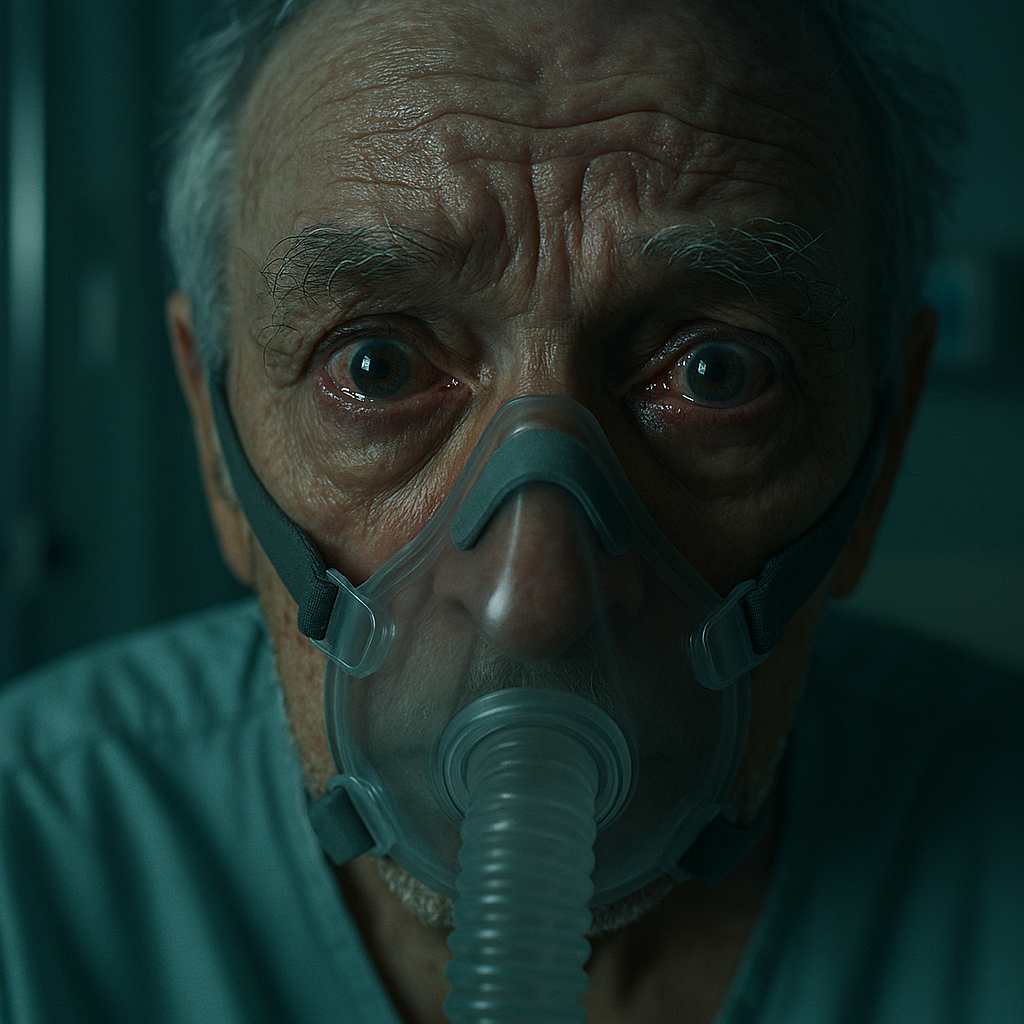
"I'm ready to go and be with God."
Those were his last words before losing the ability to speak.
The doctor agrees with the patient's self-assessment. Medically speaking, the man is dying and there's nothing more to do.
The physician gently and tactfully explains the options to the family. There are only two.
Keep him alive with a breathing tube and do CPR if needed.
Or provide comfort measures only. In other words, no intubation or CPR. Focus on keeping him calm, comfortable and pain free.
"Will he die?"
"Yes...eventually."
"When? How soon?"
"We can't be certain. Hours...maybe a day or two."
"You can't do anything more for him?"
With that, the doctor shares his diagnosis for the third time. The physician is wanted urgently in another room, but is patient, kind and gentle. He takes his time.
But this isn't what the patient's wife wants to hear. She isn't ready to surrender.
Even though her husband was DNR when admitted — Do Not Resuscitate — that changed yesterday.
Now he's full code. Which means the nuclear option is on the table: put him on a vent that breathes for him, and break some ribs if his heart stops and CPR is needed.
The couple came to an understanding yesterday — or rather, didn't.
Husband: "I want to die."
Wife: "That's not going to happen."
The doctor politely excuses himself to attend to another patient. That gives the family time to continue discussing the options.
The patient's sister reminds the woman that her husband said he wants to die.
She even quotes him: "I'm ready to go and be with God."
When that doesn't work, another family member shares what happened to his grandmother. How much she suffered — needlessly in his view — because the spouse wouldn't let her go.
After several more minutes of discussion, a nurse comes into the room. She readjusts the bi-pap mask on the man's face. She uses the opportunity to follow up with the doctor's diagnosis and treatment plan.
"Are you sure you want him to be intubated?"
"Yes."
"And are you sure you want us to give him CPR if his heart stops?"
"Yes."
She acknowledges the decision and excuses herself.
The nurse calls the chaplain. When he arrives the two discuss the situation privately in the hall.
After being brought up to speed, the chaplain enters the room. He feels the pressure to have a meaningful discussion. Full code or DNR? Intubation or comfort care?
The patient's wife and chaplain talk about the medical situation.
"What did the doctor say?"
"What would your husband want if he could speak?"
She responds but seems reluctant to do so. It's as if she's saying, "Let's change the subject, shall we?"
So, they talk about other things. She keeps tearing up and sharing memories from their marriage. Lots and lots of memories.
Time passes. Thirty minutes go by. Then 45.
The chaplain encourages the woman to keep checking in on her husband. Talk to him. Hold his hand. Let him know how much you love him.
Each time she does, family members come up to the chaplain, one by one, and whisper essentially the same thing in his ear:
"He wants to die, but she won't let him go."
The chaplain is painfully aware of the facts, but his opinion on the subject doesn't matter. Every patient and family is different, and their choices are to be respected. His job is to listen and provide comfort and support, not take sides or sit in judgment.
The nurse re-enters the room to check on the patient. She adjusts the man's bi-pap mask and looks up, silently wondering if a final decision has been made.
First the doctor, then the nurse and now the chaplain. All have done their duty to the best of their abilities.
"So," the chaplain asks the woman, "just to be clear, you want your husband to get a breathing tube?"
"Yes."
The nurse then asks a final question.
"And you want us to do CPR if his heart stops?"
"Yes."
"So, he stays full code, right? At least for now."
"Yes."
The nurse acknowledges the decision and nods her head. "I'll let the doctor know."
After the nurse leaves the room, the chaplain offers to pray. The family agrees. In fact, they are eager to do so. They gather around the bed and hold hands.
The patient is eager to pray too. He lifts his head off the pillow and makes eye contact with the chaplain. While he can't talk, his face speaks volumes:
"Help me!"
It's a face of desperation driven by pain and suffering. Some of it is physical, some emotional and some spiritual.
"Help me!"
The chaplain tears up but manages to keep his composure.
He holds the man's hand and prays. When he finishes, the chaplain opens his eyes to see the same face as before. The man's head is still bobbing up and down on the pillow, his eyes shouting even louder than before.
"Help me!"
The mask covers his mouth, but not his eyes.
The chaplain excuses himself and exits the room. To everyone in the room he is calm and collected. But he is neither.
He stops at the nurse's station to jot down a few notes in a notebook and glances back towards the room.
The doctor walks in and closes the door behind him.
###